
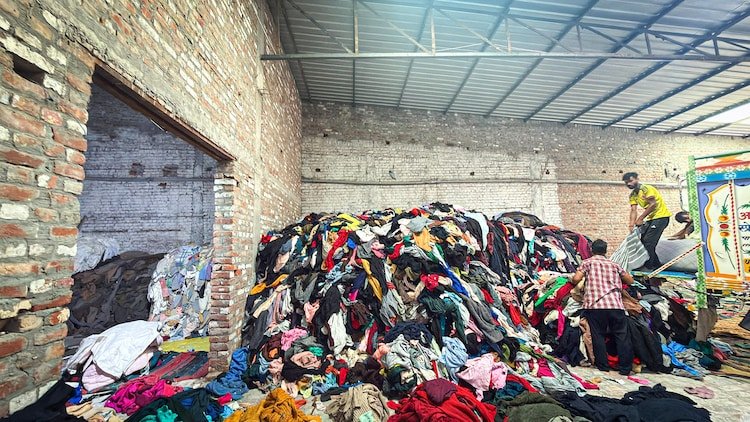
Every year, millions of tonnes of discarded clothing from India and around the world arrive in Panipat, Haryana—a city that has become one of the world’s largest textile recycling hubs. What many people see as waste is transformed here into valuable raw material, proving that old clothes can have many new lives.
The journey begins when used garments, factory scraps, and unsold clothing reach Panipat through collection centres, NGOs, textile manufacturers, and international shipments. Skilled workers carefully sort every item by colour, fabric type, and quality. Clothes that are still wearable are sent to second-hand markets, while damaged textiles move to recycling units.
In recycling factories, old fabrics are shredded, cleaned, and converted back into fibres. These fibres are then spun into yarn and used to manufacture new products such as blankets, rugs, bath mats, denim, home furnishings, and even fashionable clothing. By recycling existing textiles instead of producing everything from new raw materials, manufacturers reduce waste, conserve natural resources, and lower the environmental impact of textile production.
Many businesses in Panipat are also adopting cleaner technologies, including solar-powered facilities, efficient dust collection systems, and processes that minimise water use by sorting fabrics according to colour instead of dyeing them again.
While the city has become a global example of circular fashion, the industry also faces challenges. Some small, unorganised units still struggle with worker safety and environmental standards. However, many organised manufacturers are investing in better working conditions, health monitoring, and modern recycling technologies, including AI-assisted sorting systems.
Panipat demonstrates that sustainability is not only about recycling—it is about creating an entire ecosystem where discarded materials become valuable resources once again. Every old T-shirt, pair of jeans, or fabric scrap processed here helps reduce landfill waste and supports a more circular economy.
Why this story matters
- Diverts millions of tonnes of textile waste from landfills
- Turns old clothes into new products through recycling
- Conserves water, energy, and raw materials
- Supports a circular economy and sustainable manufacturing
Source: Inspired by India Today – “In Panipat: How the World’s Textile Trash Gets a Second Life” (July 2026).